
Benefits & FAQs
Why sitegeist? Because you deserve a fair work-life balance. Because you value continuous learning and actively seek it. Because you appreciate a warm, team-oriented atmosphere and have a passion for open source. Because you're excited about challenging projects and eager to learn from some of the best minds in the industry. You enjoy innovation, deserve recognition — and a salary that reflects your value.
In short: you deserve a job at sitegeist.









FAQs
Our personal favourite question, because our sitegeister are the most important thing for us - as people, for our team, for our expertise and for our success. That's why we do everything we can to ensure that our sitegeister are happy with their job.
sitegeist favours flexible and agile working. Digital is our "normal", which is why working from home and hybrid working are part of our daily business. With us, you can work from home up to 3 days a week. If you live more than 100 km away from the agency, we can discuss 100% remote working on an individual basis.
Working longer hours is really the exception for us, but it can't always be avoided. If it does happen by way of exception, the following applies: everything is balanced out via your working time account. Always. 100% of the time. If there's not much to do next week and the sun is shining: off to the Elbe beach.
It's EMPTY here at the weekend.
The working time account model works really well. Your health is very important to us, so we want to minimise overwork and prevent it with clear rules in the interests of your health. a traffic light system has been introduced to counteract excessive accumulation of overtime.
The advantage of the traffic light model lies in the built-in "attention thresholds" that require action. This prevents overtime from increasing unnoticed. Flexibility is an option - not a must. The traffic light system also records minus hours that may occur due to low capacity utilisation, for example. The thresholds for minus hours are set lower, as a high number of minus hours is likely to increase the pressure to work more hours in a compressed manner.
The traffic light system ensures that overtime is avoided, effectively managed if unavoidable and promotes a healthy work-life balance. In the green zone (up to 40 hours of overtime or up to 20 minus hours), employees can reduce their hours independently. If they reach the yellow zone (40-80 overtime hours or 20-40 minus hours), a meeting is held with the team coach to plan the reduction in hours within six months. In the red zone (80 or more overtime or 40 or more minus hours), an urgent discussion with all relevant managers is necessary in order to reduce the overtime quickly and prevent further accumulation. Our BULs and Agile Coaches aterpreview the hours on a monthly basis and support the team in using the system transparently and flexibly.
Our experience with this system is excellent. And that's why we're talking about it openly here, because we were only able to confirm it with this system: With mindfulness, burnout is avoidable.
Flexible. For example, you can customise your working time model with us. We are also quite flexible about when you start and how you divide up your working hours. Our core working hours are 9.30 a.m. - 3 p.m. with 8 hours a day. Individual special arrangements due to part-time work, daycare, etc. are possible and will be clarified with the business unit lead.
You can organise your lunch break when and how you like.
Spontaneous deviations can be clarified individually in your team with the Business Unit Lied Lead.
Yes, that's why we invented the so-called initiatives.
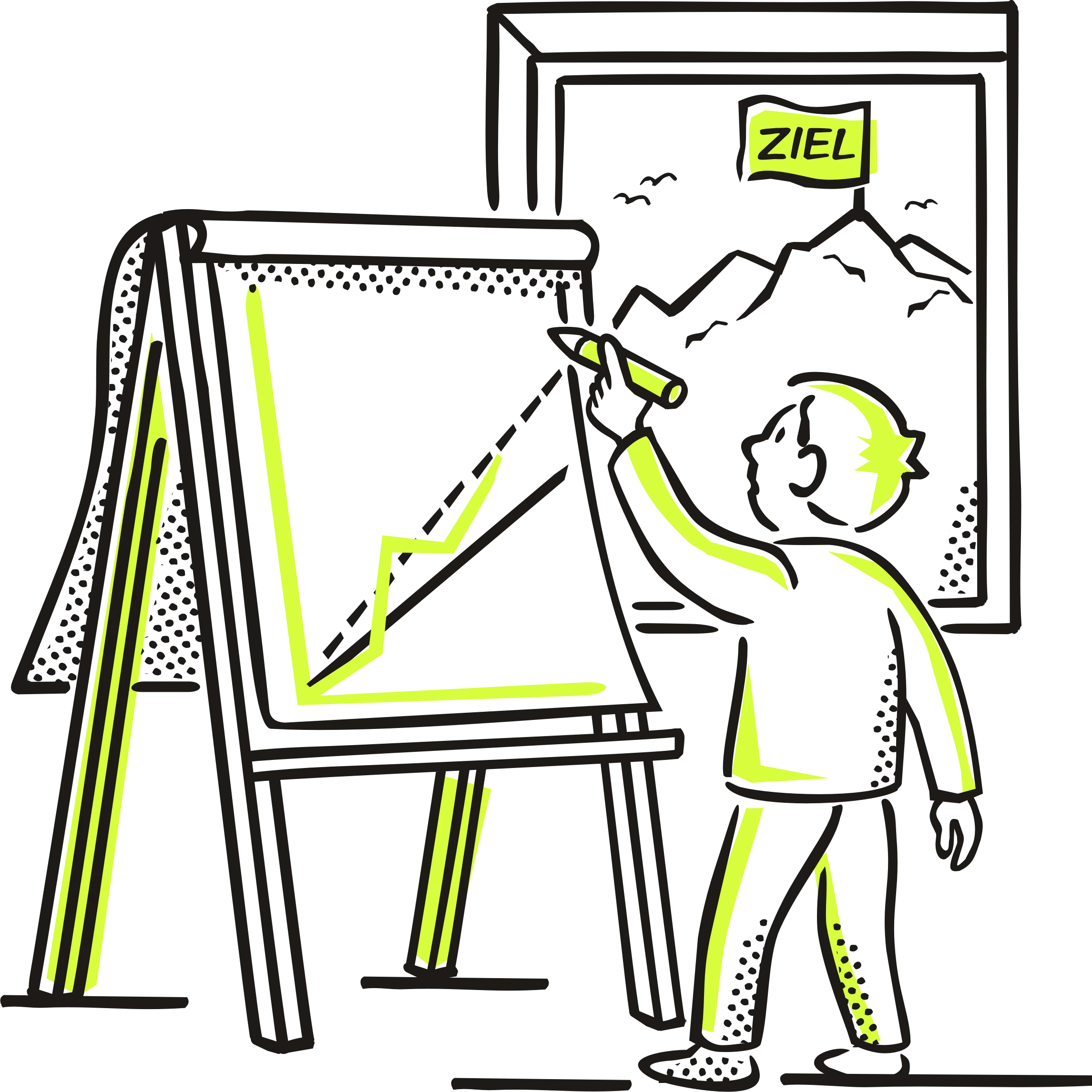
An initiative is a working group that works on a specific topic within a predefined time frame and with a fixed maximum time budget. Before the initiative begins, the goal must be defined, a lead must be named and a time frame for the duration of the work must be defined. The lead has a fixed amount of time available to work on the initiative. Up to 3 other people may work on an initiative in addition to the lead.
Goals
We want to be able to react more quickly to changes and align ourselves even more closely with the needs of our customers. We want to create more space for employees who want to advance important topics quickly and make the best possible contribution according to their inclinations and skills. Important topics should be identified more quickly and assigned to those employees who are particularly motivated and suited to them.
Time budget: The time spent working on the initiative is prioritised equally to day-to-day business, i.e. even when fully occupied with day-to-day business, the lead has the right to regularly devote part of their working time to working on the initiative and to reduce their capacity for day-to-day business accordingly. It is explicitly desired that people take the time to work on the initiative. If someone lacks the time to participate in an initiative due to too much day-to-day business, our Agiles are available to look together at ways to create sufficient time for the initiative by prioritising and distributing tasks appropriately.
Time budget per initiative:
1day per week (8 hours) - in total per initiative, not per participant
Like a project, an initiative has a limited duration. As a rule, the period for an initiative should be around 4 months. However, the duration can be extended if necessary.
Start at a Hollenstedt - Presentation of the interim status at the next Hollenstedt - Result at the next but one Hollenstedt
Initiatives are temporary leadership on a specific topic, for a specific period of time, for a specific topic, for EVERYONE, anyone can propose initiatives, anyone can be the lead of an initiative.
Number of simultaneous initiatives 2+2=4, up to 2 initiatives from employee proposals, up to 2 initiatives are defined by the management.
Examples of initiatives that have already been implemented include
- our internal video training platform "sitegeist Academy
- our intranet "sitegeist Insights "
- Establishment of a software architecture peer group
- AI
- sitegeist becomes climate neutral
- Diversity at sitegeist
We are a little proud of our induction programme:
- you are part of the team from day one
- remote or with your own workplace
- your own laptop
- Email address
- and a permanently accessible digital team room - even if onboarding takes place remotely.
Our true onboarding supererpower are our mentors.
During your start at sitegeist, you will always have a mentor from the team by your side. They will answer all your questions, give you insider information and support your personal onboarding. Discover a typical first day at sitegeist now:
No, because that's our job. You can simply look forward to working with your new colleagues. We support you right from the start with our unique sitegeist Feelgood process.
Our customers are really nice, but if you want to and it suits the project, you can also work at sitegeist as a developer without any customer contact. What counts for us is that you are doing well and that you enjoy our joint projects.
Discover all sitegeist jobs now. If you can't find the right job for you, please send us an e-mail anyway:
We will definitely get back to you once you have emailed us your application documents. If there is a lot to do due to holidays or illness, it may take a few days. So please be patient, we will take our time to review your application.
Because for us, Hamburg is the most beautiful city in the world and the gateway to the world - also when it comes to TYPO3, Neos, e-commerce and the digital future. As a media city, Hamburg is home to numerous agencies, media companies, a hotspot for the German gaming industry and what other city has its own beach, the Reeperbahn and more bridges than Venice?
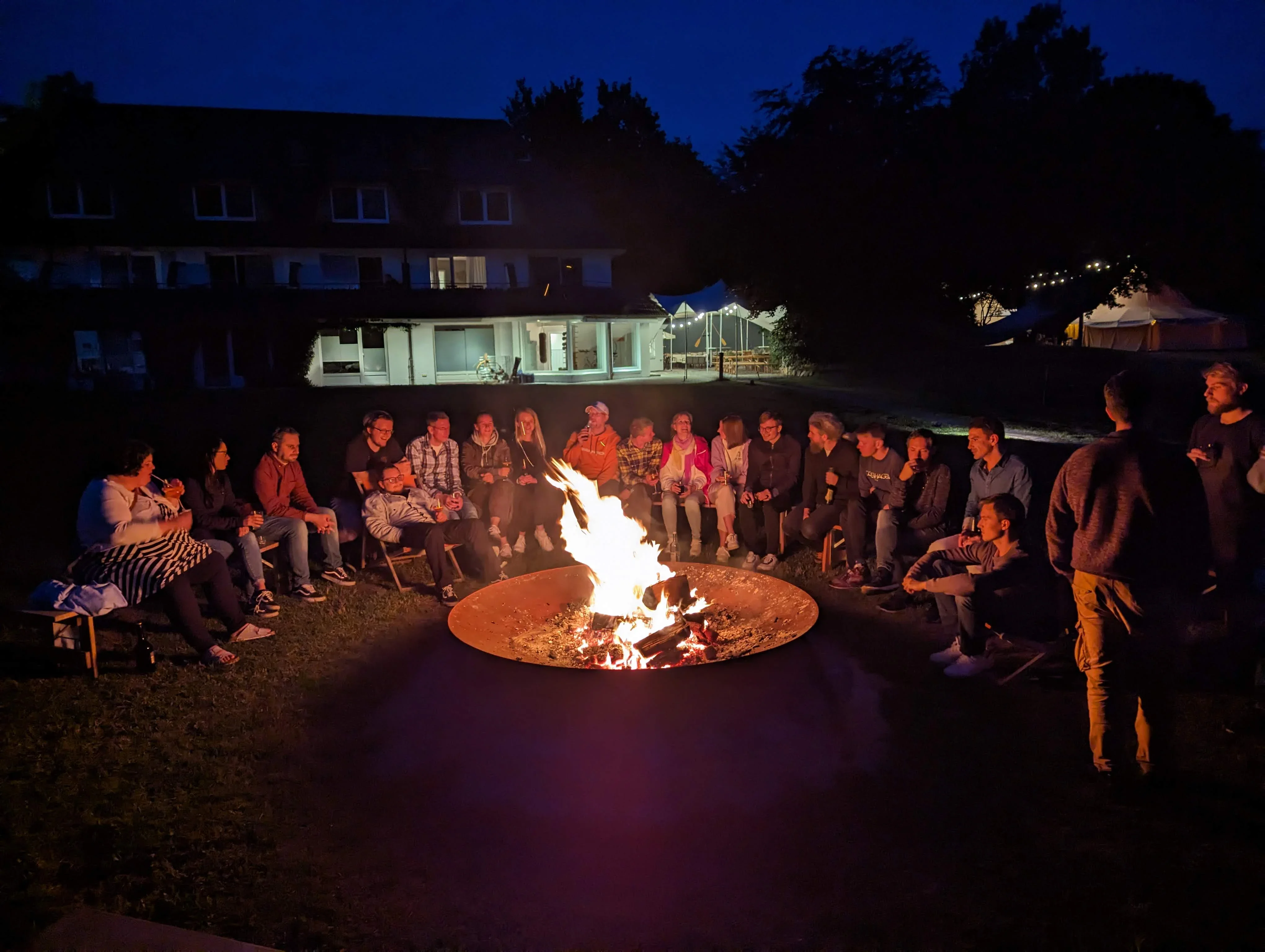
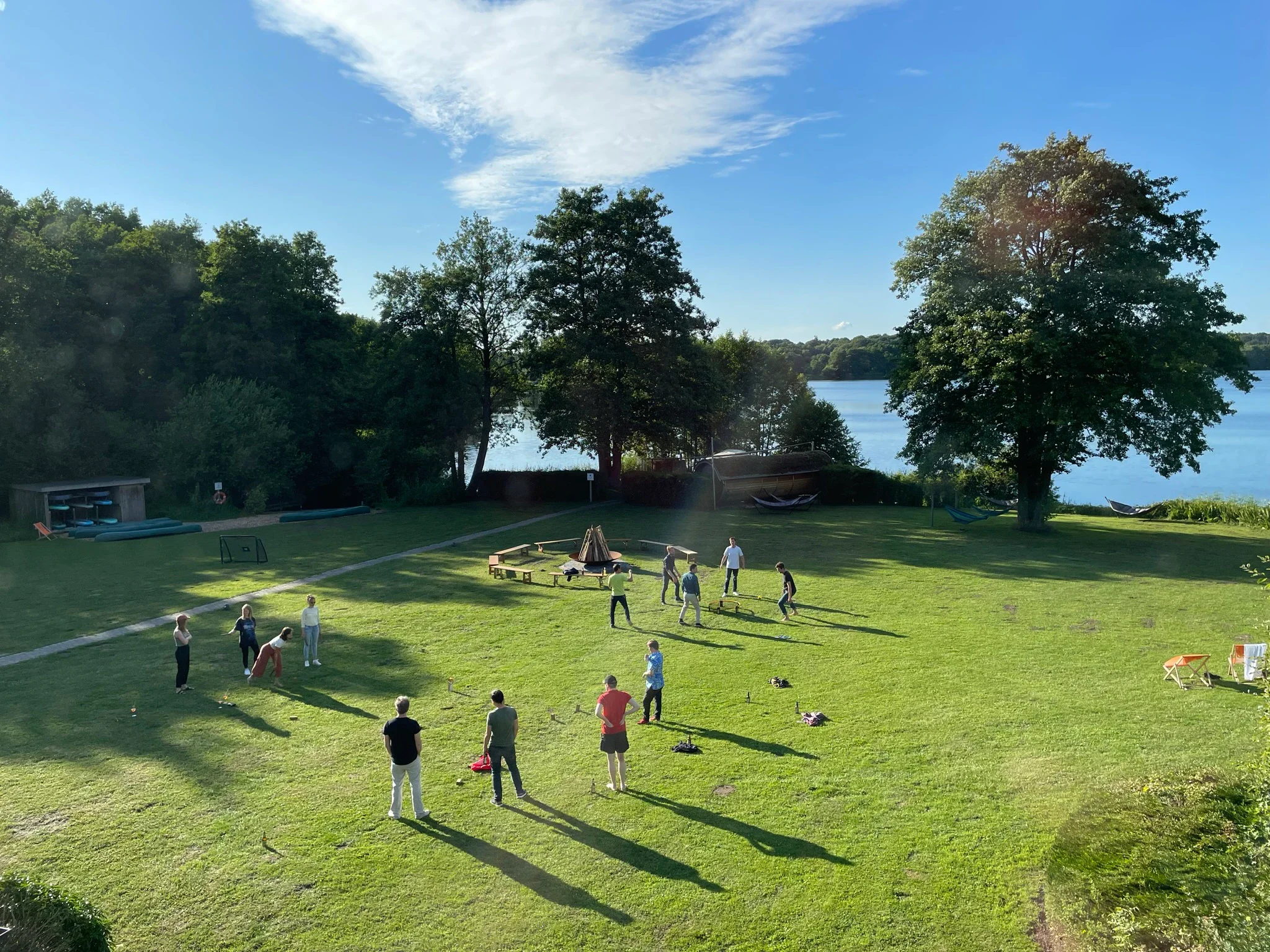
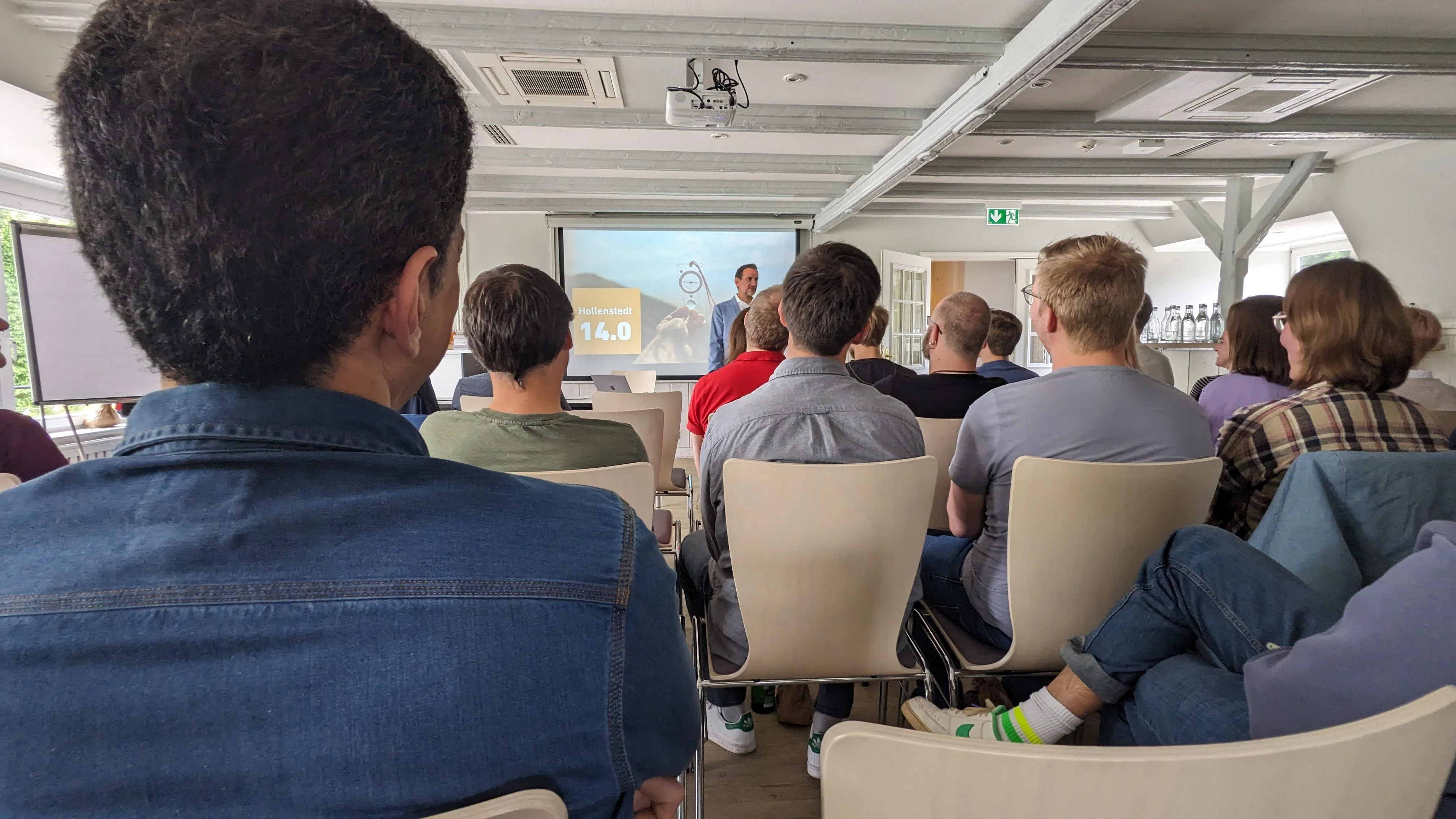
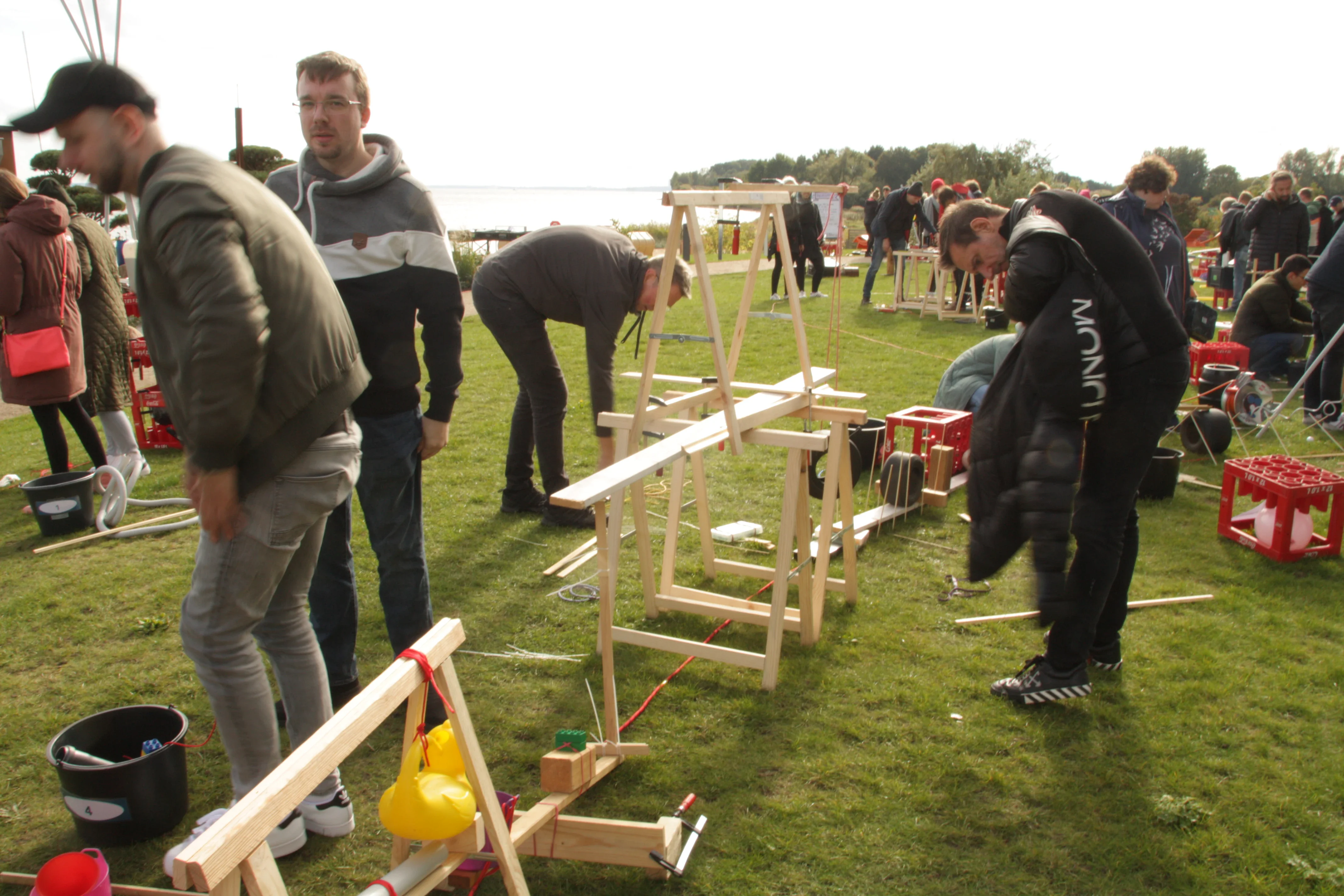
The "Hollenstedt" is our regular think tank with all sitegeistusers. The first of this kind took place in Hollenstedt (in Lower Saxony) and the location gave our meeting its name.
As a rule, 1-2 one-day Hollenstedts (within Hamburg or in the office) and a two-day Hollenstedt (outside Hamburg with overnight stay and party) take place every year.
At this meeting, all sitegeisters get an insight into the status of the company, including the current figures. You can see what has happened in the other teams and units. We discuss current topics together, such as strategy and direction. We scan together to see where we stand, where we are doing well and where we want to change things. A lot of group work, mostly in presence and always a lot of fun.
Our think tanks "Hollenstedt"
The best ideas for our company are developed together at the regular think tank. Just get out and about with the whole company.
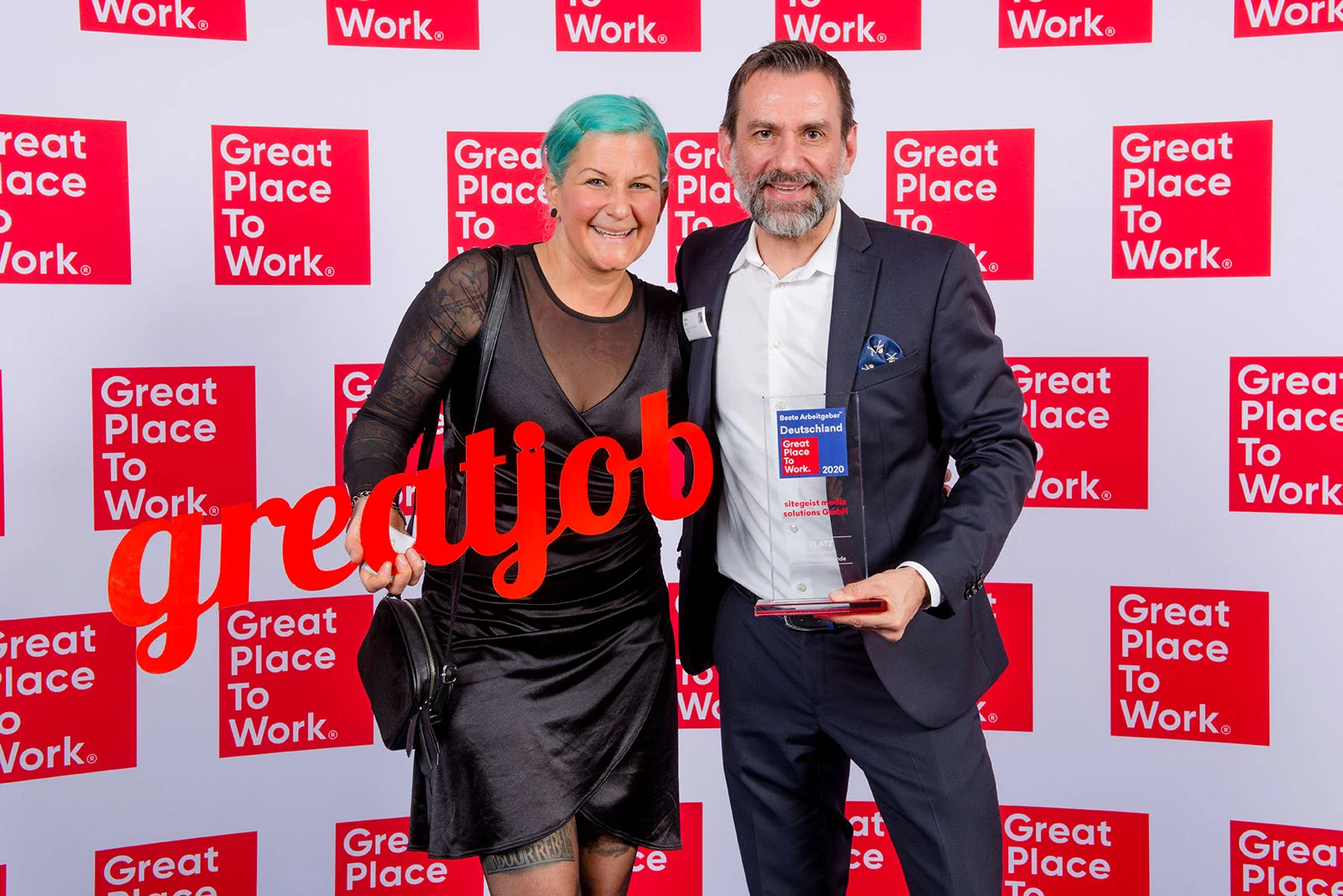
Expect nothing less than an exceptional company culture.